
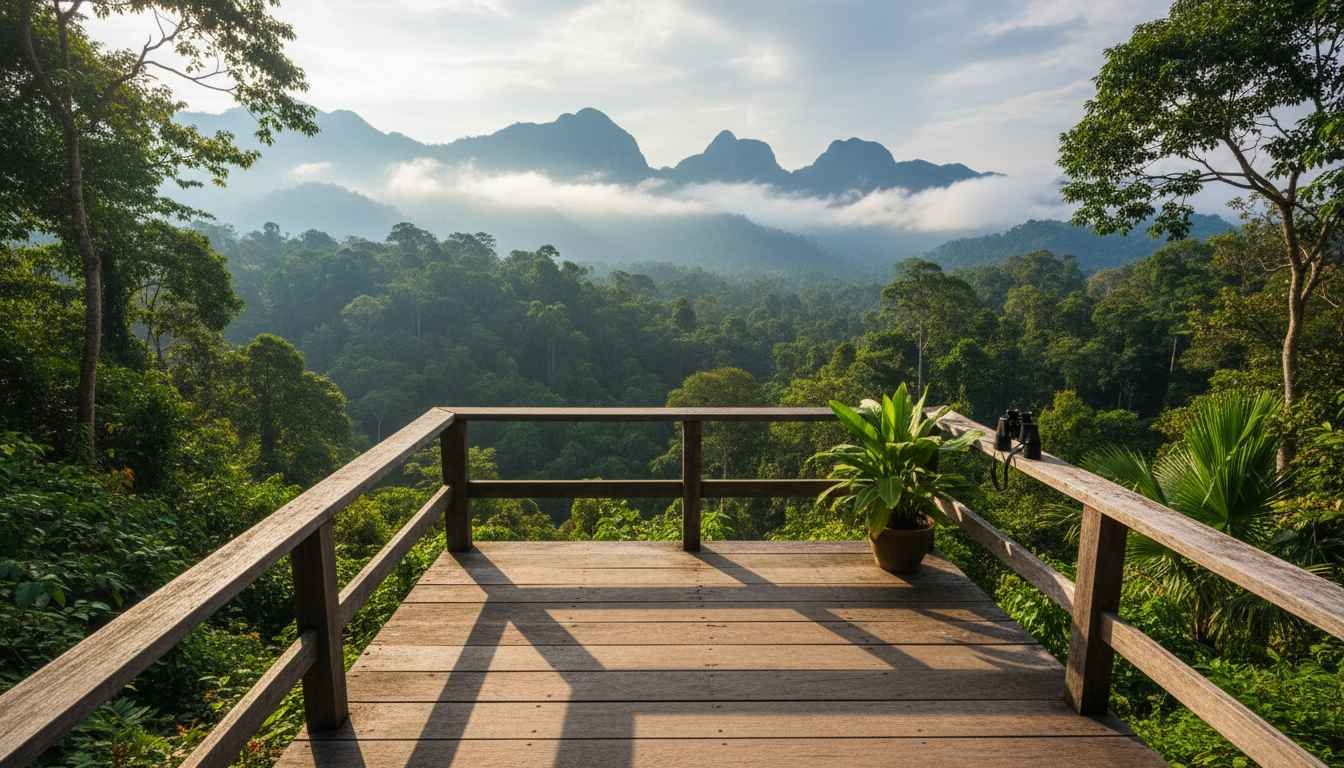
The plane banks over the South China Sea and there it is: a green wall of rainforest rising to a granite peak that catches the morning light. Malaysian Borneo — the states of Sabah and Sarawak on the world’s third-largest island — packs an almost unfair concentration of wildlife, mountains, and coastline into one trip. These are the best places to visit in Malaysian Borneo, from orangutan sanctuaries to world-class dive sites.
Kota Kinabalu: The Gateway City
Most Borneo trips start in Kota Kinabalu (universally called KK), Sabah’s capital. It’s a working waterfront city rather than a polished resort town — and that’s its appeal. The waterfront hawker stalls at Anjung Senja serve grilled seafood as the sun drops behind the islands of Tunku Abdul Rahman Marine Park, a 20-minute boat ride offshore, where you can snorkel coral reefs on a day trip. Give KK a night or two on arrival: it’s your logistics base, and the mountain views on a clear morning are genuinely spectacular.
Kinabalu Park: Malaysia’s Highest Peak
Two hours inland, Kinabalu Park protects Mount Kinabalu (4,095 meters) — Malaysia’s highest mountain and a UNESCO World Heritage site. You don’t have to climb it to appreciate it: the park’s botanical gardens and nature trails at the base showcase one of the richest concentrations of plant life on Earth, including dozens of orchid and pitcher-plant species. Serious hikers can book the two-day summit climb (permits are limited and sell out, so reserve months ahead), timing the final ascent for sunrise above a sea of clouds. Even from the park headquarters at 1,500 meters, the mountain dominates every view.
Sepilok Orangutan Rehabilitation Centre
Near Sandakan on the east coast, Sepilok is Borneo’s most famous wildlife stop — a rehabilitation center for orphaned and injured orangutans, set in virgin rainforest. Visit during the morning or afternoon feeding times, when semi-wild orangutans swing in to the feeding platforms, and walk the boardwalk through the canopy afterward. The adjacent Sun Bear Conservation Centre, home to the world’s smallest bears, is an easy and worthwhile add-on. Go with realistic expectations: this is a working rehabilitation facility, not a zoo, and sightings depend on the animals’ whims — which makes a sighting feel earned.
Kinabatangan River: Borneo’s Wildlife Highway
South of Sandakan, the Kinabatangan River offers the island’s best wildlife viewing. Dawn and dusk river cruises drift past proboscis monkeys — the big-nosed primates found only on Borneo — along with hornbills, crocodiles, and, with luck, pygmy elephants coming to the water’s edge. Stay at a riverside lodge for two nights to catch both the evening and morning cruises; the mist on the water at sunrise is worth the early alarm alone.
Sandakan: History and Heritage
Sandakan itself deserves half a day for its sobering history. The Sandakan Memorial Park marks the site of the WWII prisoner-of-war camp and the start of the infamous Sandakan death marches; the quiet, well-kept grounds and small museum tell the story with restraint. It’s a somber but important stop — pair it with the Agnes Keith House, the colonial-era home of the author of Land Below the Wind, for the city’s pre-war chapter.
Sipadan: World-Class Diving
Off Sabah’s southeast coast, Sipadan Island is regularly ranked among the world’s top dive sites — a oceanic island rising from the deep with swirling tornadoes of barracuda and jackfish, green turtles on nearly every dive, and reef sharks cruising the drop-offs. Access is tightly controlled: only a limited number of dive permits are issued per day, so book through a licensed operator well in advance and stay on nearby Mabul or Kapalai. Non-divers can snorkel the shallows, but Sipadan is fundamentally a diver’s pilgrimage.
Don’t Skip Sarawak
If your itinerary allows, cross to Sarawak in the west. Kuching, the capital, is one of Malaysia’s most pleasant cities, with a waterfront esplanade and excellent food. Nearby Bako National Park packs proboscis monkeys, bearded pigs, and dramatic sea-stack coastline into a compact day trip, while Gunung Mulu National Park — a UNESCO site — holds some of the largest cave chambers on Earth. Sarawak deserves its own trip, but even a few days here round out the Borneo picture.
Planning Your Borneo Trip
Fly into Kota Kinabalu for Sabah or Kuching for Sarawak; AirAsia and Malaysia Airlines connect both to Kuala Lumpur, so many travelers pair Borneo with one day in Kuala Lumpur on the way through. The dry season (roughly March to October) is the most comfortable window, though Borneo’s rainforest climate means brief showers year-round. Book internal flights, Kinabalu climb permits, and Sipadan dive permits as early as you can — the best experiences here are all capacity-limited.
FAQ: Visiting Malaysian Borneo
How many days do you need in Malaysian Borneo? Ten days to two weeks covers Sabah’s highlights (KK, Kinabalu, Sepilok, Kinabatangan, and a dive stop). A week works if you focus on either the west coast or the east coast, not both.
Is Borneo safe for tourists? Sabah and Sarawak’s tourist areas are generally safe and well set up for visitors. Standard travel precautions apply, and it’s worth checking your government’s current travel advice for eastern Sabah’s coastal areas before finalizing plans.
When is the best time to visit? March to October brings the driest weather, best for climbing, diving visibility, and wildlife viewing. Shoulder months can offer lower prices with only slightly higher rain chances.
Final Thoughts
Malaysian Borneo isn’t a checklist destination — it’s a place that rewards slowing down: a second river cruise, one more dawn at the feeding platform, an extra night under rainforest canopy. Plan the logistics early, then give the island the time it deserves.