
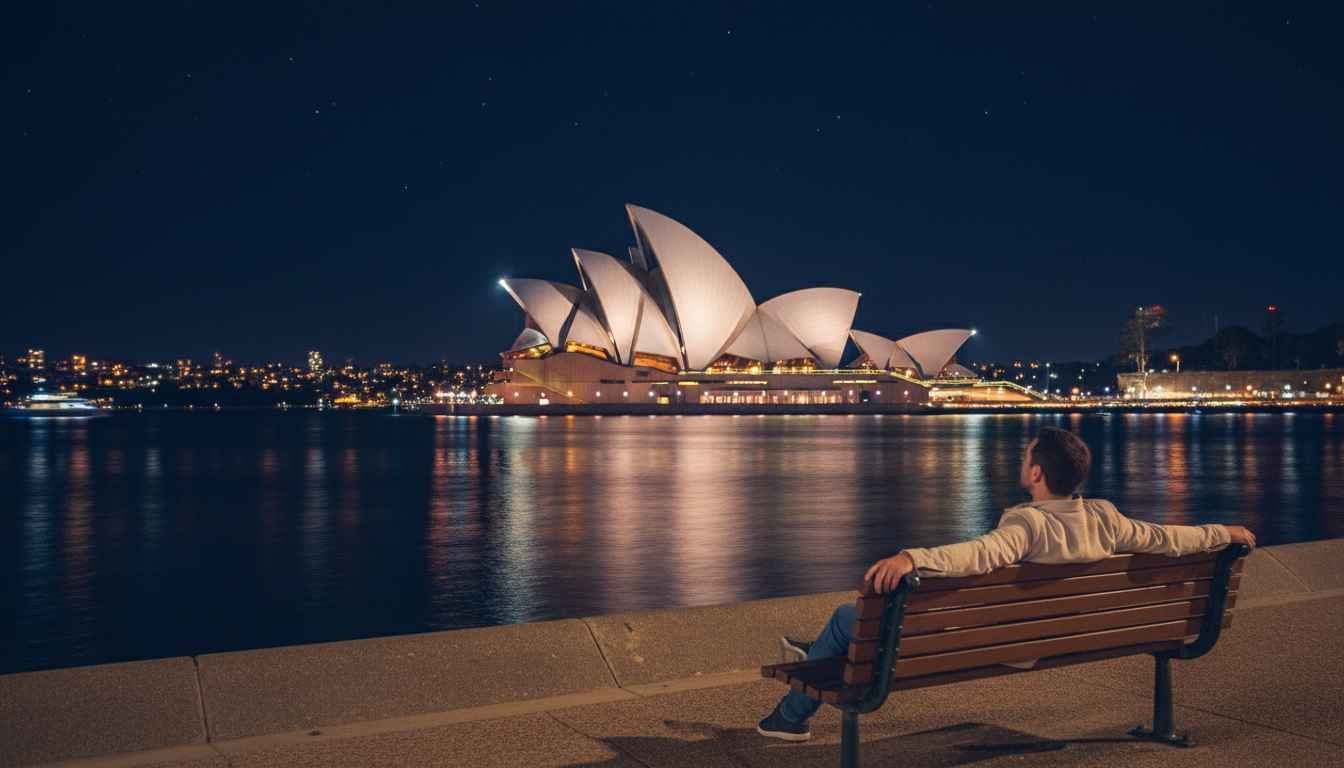
Stand on the harbour at night and Sydney shows you its best side: the Opera House sails lit against the water, the Harbour Bridge strung with lights, and ferries crossing the harbour like moving lanterns. Sydney after dark is not a single scene but several, from grand landmarks to quiet beach walks, and this guide covers the best places to visit in Sydney at night for first-time visitors.
The Opera House and Circular Quay
Begin at Circular Quay, where the Sydney Opera House and the Harbour Bridge frame the same view. The Opera House is most striking after sunset, when its sails are lit; check the evening performance schedule if you want to go inside, and book ahead for popular shows. From the Quay, the harbour walk toward the Royal Botanic Garden gives you the classic postcard view with fewer crowds than the Quay itself.
The Harbour Bridge and the Rocks
The Sydney Harbour Bridge, nicknamed the Coathanger, is best seen lit at night from the water or from the Quay. Climbing the bridge at night is possible through the official BridgeClimb, for those who book ahead and meet its requirements; otherwise, the free walk across the bridge’s pedestrian path still gives panoramic night views of the harbour and skyline.
Below the bridge’s southern end, The Rocks is Sydney’s oldest neighbourhood and its best evening dining district: historic pubs, laneway restaurants, and weekend markets. It is the natural place for dinner after a harbour walk, with options from casual pubs to fine dining.
Darling Harbour
Darling Harbour, a short walk west of the city centre, is the city’s evening entertainment precinct: waterfront restaurants, bars, and live music, plus attractions that run evening hours on some days. It suits families and groups who want a lively, easy night out without planning, and its fireworks on Saturday nights during some seasons are worth checking before you go.
Beaches After Dark
Sydney’s beaches change character at night. Bondi Beach is best for an evening coastal walk along the promenade, with the sound of the surf and the lights of the beachfront cafes. Coogee and Manly offer quieter evening walks, and the Manly ferry ride itself, crossing the harbour after dark, is one of the city’s great cheap night experiences. Check ferry timetables, as services thin out late in the evening.
Observatory, Gardens, and Seasonal Lights
Sydney Observatory, on Observatory Hill, runs night telescope sessions on some evenings, offering a different view of the city: the southern sky. The Royal Botanic Garden, beside the harbour, is a peaceful evening stroll when it is open late for events. In the winter months, the Vivid Sydney festival, usually held around May and June, lights up the Opera House, the Bridge, and the harbour precinct with projections and installations; check the year’s dates before planning a trip around it.
If you are planning more Australian travel after Sydney, our guide to unique places to visit in Gold Coast covers Queensland’s coastal city for a contrasting second stop.
Practical Tips for Sydney at Night
Use an Opal card or contactless payment for ferries, trains, and buses, and check last-service times before heading to a beach suburb. The city centre, Darling Harbour, and The Rocks are easy on foot; beach suburbs need a bus or ferry. Evenings are mild in summer and cool in winter, so carry a light layer year-round. Keep valuables in sight in busy nightlife areas, as in any big city.
FAQ
What is the best free thing to do in Sydney at night? Walk Circular Quay to the Botanic Garden, or take the Manly ferry at night for harbour views at the cost of a normal fare.
Is Sydney at night suitable for families? Yes. Darling Harbour, the Observatory, and early-evening beach walks all suit children, and many restaurants are family-friendly before late evening.
When is the best time to visit Sydney at night? Spring and summer bring warm evenings and outdoor events; winter brings Vivid Sydney’s light festival.
Final Thoughts
Sydney at night works because it mixes the grand and the quiet: a lit-up Opera House, a pub dinner in The Rocks, a ferry across dark water, and a walk along a night beach. Do two or three of those in one evening and you will understand why the city is so often described by its harbour after dark.