
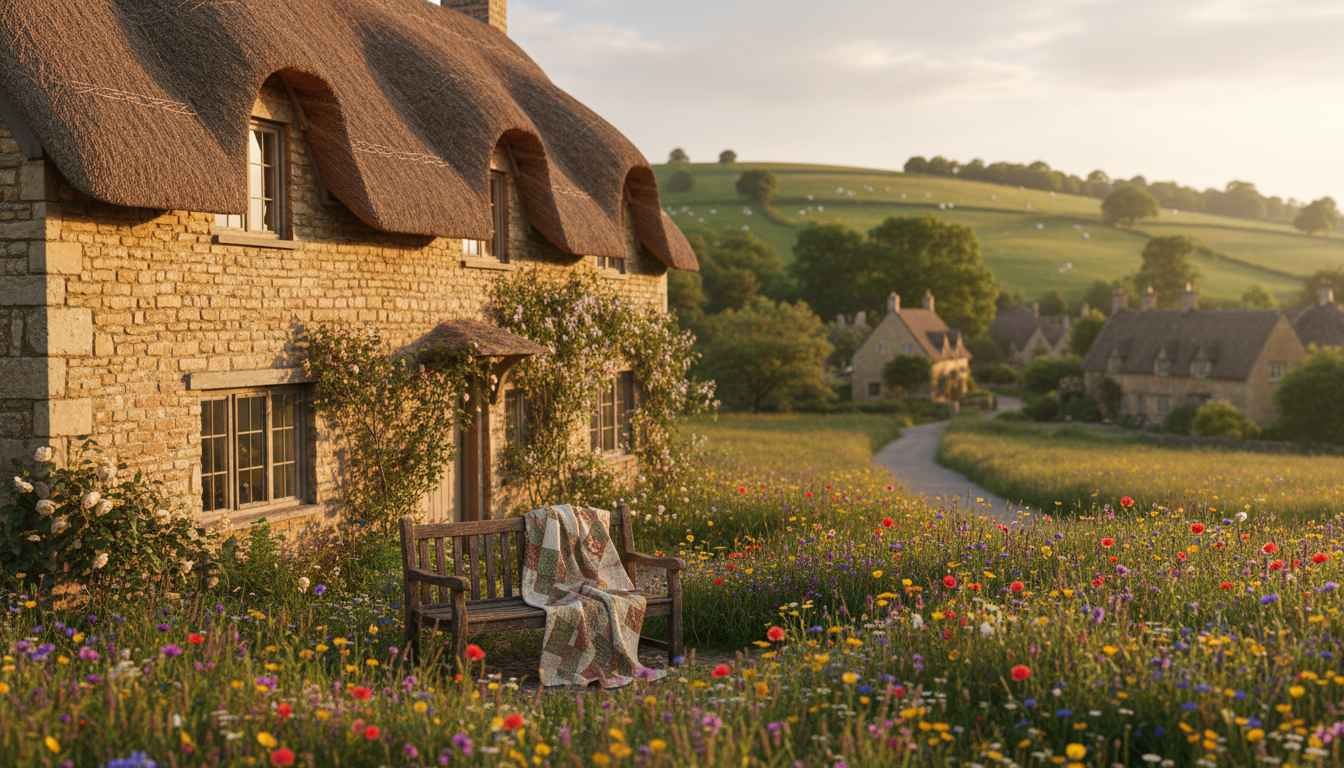
You step off a narrow lane in Bibury and the stone cottages of Arlington Row are reflected in the little stream below, exactly as they have been for centuries. That quiet, honey-coloured moment is the Cotswolds in a nutshell: no single attraction, but a whole landscape of villages, market towns, and walking country that rewards slowing down. These are the best places in the Cotswolds to visit, chosen for first-time visitors who want the classic sights plus a few quieter corners.
Historic Market Towns
Start with Cirencester, often called the capital of the Cotswolds. It was one of Roman Britain’s largest towns, and the Corinium Museum tells that story well, with mosaics and finds from the Roman town. Its market square, parish church, and independent shops make it an easy base for the southern Cotswolds.
Chipping Campden, at the northern end of the region, keeps its medieval character in a long High Street lined with limestone buildings, a 17th-century market hall, and almshouses. Stow-on-the-Wold, the highest town in the Cotswolds, is known for antique shops, tea rooms, and a market square with stocks and an ancient cross. All three are best explored on foot, with time for a long lunch.
Villages You Should Not Skip
Bibury itself deserves more than a photograph. Walk past Arlington Row to the trout farm and the little footbridges, then follow the River Coln for a gentle riverside stroll. Bourton-on-the-Water, sometimes called the Venice of the Cotswolds, has low stone bridges crossing the River Windrush, a model village, and a motor museum that children tend to love.
Castle Combe is smaller and quieter, a single street of stone cottages that has appeared in films for good reason: there is almost nothing modern to spoil the view. Snowshill, nearby, pairs a pretty village with Snowshill Manor, a National Trust house filled with an extraordinary collection of toys, musical instruments, and armour. If you are planning a wider English trip after the villages, look at free places to visit in Leicester for a city stop that balances the countryside days.
Walking and the Outdoors
The Cotswold Way is the region’s signature walk: a 102-mile National Trail running from Chipping Campden to Bath. Few visitors walk it all, but its day sections are the best way to see the landscape, especially the stretches around Broadway and Winchcombe, with views across the Severn Vale. Wear proper walking shoes and carry water, as some sections cross open farmland with no shops.
Westonbirt Arboretum, near Tetbury, is the classic autumn stop, when its maples turn; in spring and summer it is a calm place for a woodland walk. The Cotswold Water Park, a network of lakes near Cirencester, offers boating, fishing, cycling, and birdwatching, and works well for families who want an active day between village visits.
Broadway Tower and the Northern Edge
Broadway Tower, a folly on a hilltop above the village of Broadway, gives one of the widest views in the region, across sixteen counties on a clear day, according to local guides. The village below, with its wide High Street and horse chestnut trees, is a good lunch stop. From here, the villages of the northern Cotswolds, including Broadway and Snowshill, feel noticeably quieter than the honeypot stops further south.
Practical Tips for Visiting the Cotswolds
A car makes the villages far easier to reach, as bus services between smaller villages are limited, especially on Sundays. If you are travelling without a car, base yourself in a town with a rail station, such as Moreton-in-Marsh or Kemble for Cirencester, and use local buses and taxis for day trips. Two full days cover the highlights at a relaxed pace; three days let you add a long walk and a second market town. Check opening times before you go, as smaller National Trust properties and museums often close on some weekdays outside summer.
FAQ
When is the best time to visit the Cotswolds? Late spring and early autumn offer the best balance of pleasant walking weather and smaller crowds. Summer is busiest, and autumn brings the arboretum colours.
Do you need a car in the Cotswolds? It helps a great deal for villages, but you can manage by train and bus if you base yourself in a larger town and plan day trips carefully.
Is the Cotswolds suitable for families? Yes. Bourton-on-the-Water, the Water Park, and the arboretum all suit children, and most walks can be shortened to an easy riverside or village route.
Final Thoughts
The Cotswolds rewards the unhurried visitor. Pick one market town as a base, walk one stretch of the Cotswold Way, linger in two or three villages, and leave room for a tea room you did not plan. That mix of history, walking, and quiet village life is what makes the region worth the trip.