
Seoul in January is a city of beautiful contrasts: snow settling on the curved tile roofs of hanok houses, steam rising from street-food stalls, and neon glowing a little brighter against the early dark. Winter strips the South Korean capital down to its essentials — grand palaces, buzzing markets, mountain views — and adds a crisp, photogenic magic you won’t find in any other season. Here are the best places to visit in Seoul, Korea during winter.
Gyeongbokgung Palace in the Snow
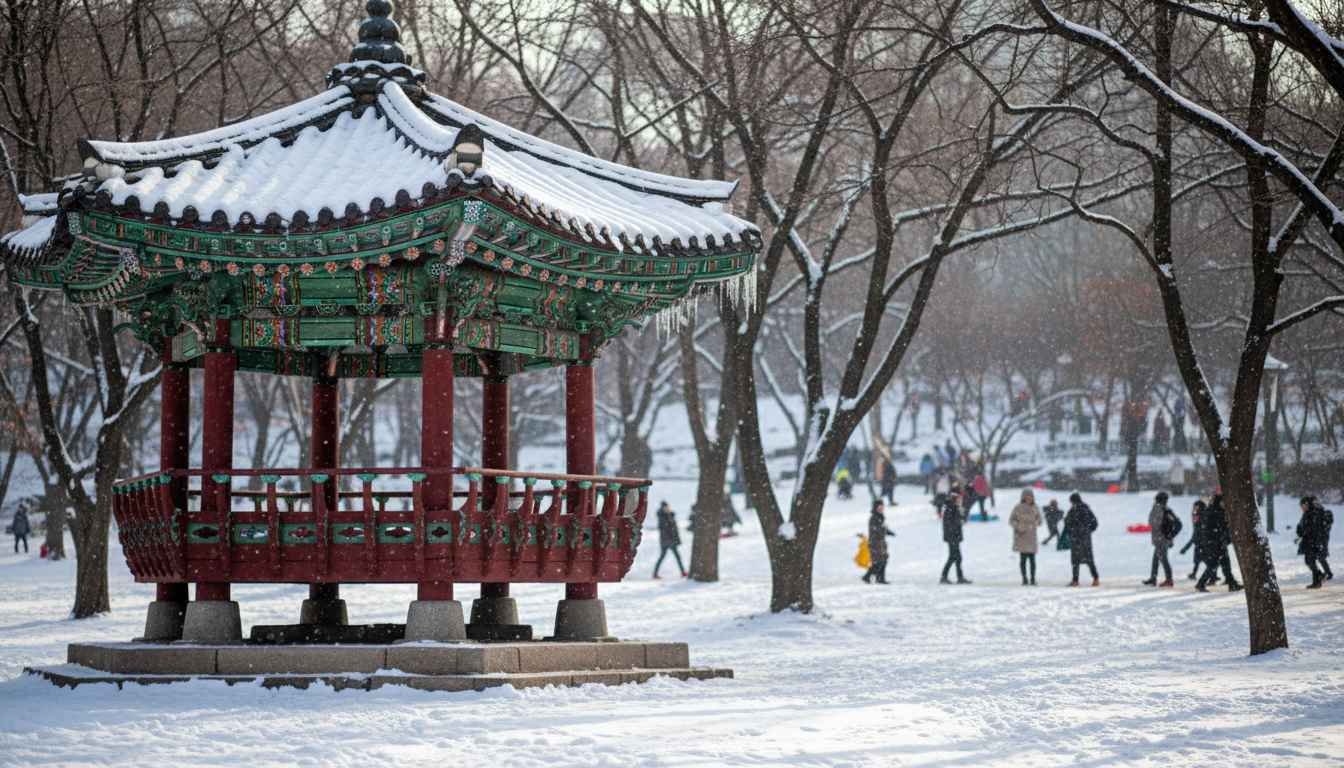
Seoul’s grandest royal palace, the main seat of the Joseon dynasty, is at its most atmospheric under snow. Arrive early on a snowy morning and you’ll have the vast courtyards nearly to yourself, the palace halls stark and elegant against white grounds. Don’t miss the changing-of-the-guard ceremony at the main gate, a colorful re-enactment of Joseon-era ritual. Tip: visitors wearing traditional hanbok have traditionally been granted free admission — confirm the current policy before you go, and consider renting one nearby for unforgettable photos.
Bukchon Hanok Village
A short walk from Gyeongbokgung, Bukchon is a hillside neighborhood of hundreds of traditional Korean hanok houses, their tiled roofs especially charming dusted with snow. The lanes climbing toward the famous photo viewpoints are among Seoul’s most photographed spots in winter. Remember this is a real residential neighborhood — keep voices down and stick to the designated photo areas out of respect for residents.
N Seoul Tower on Namsan
Rising above the city on Namsan Mountain, N Seoul Tower offers the definitive winter panorama: the Han River winding through a glittering cityscape, the mountains ringing the horizon. Ride the cable car up or hike the well-kept trails if you’re feeling energetic. At the base, the terrace railings hung with “love locks” make a classic photo stop, and the tower’s observation decks are gloriously warm when the wind bites outside.
Myeongdong: Shopping and Winter Street Food
When the cold sets in, head to Myeongdong, Seoul’s famous shopping district, where the real winter attraction is the food. Stalls line the pedestrian streets selling steaming odeng (fish cake skewers) in hot broth, hotteok (sweet pancakes filled with brown sugar and nuts), and tteokbokki (spicy rice cakes) — the holy trinity of Korean winter street food. Eat standing at the stall, hands wrapped around something hot, like a local.
Gwangjang Market: Eat Your Way Warm
For a deeper dive, Gwangjang Market — one of Korea’s oldest traditional markets — is winter comfort food central. Squeeze onto a stool at a food alley stall for bindaetteok (crispy mung bean pancakes), gimbap, and endless banchan, all cooked inches from your elbows. The market’s covered alleys are a welcome refuge on the coldest days, and the people-watching is half the fun.
Cheonggyecheon and Winter Light Festivals
The Cheonggyecheon stream, an 11-kilometer waterway restored through the heart of downtown, becomes a ribbon of light in winter. The Seoul Lantern Festival is usually held here in late autumn and early winter, with hundreds of illuminated lantern sculptures floating above the water — check the year’s dates before planning around it. Even outside festival time, the stream’s winter illuminations make for a lovely evening walk.
Ice Skating at Seoul Plaza
Each winter, the plaza in front of City Hall typically transforms into a public outdoor ice rink, usually operating from around December through February. Skating under the city lights with the historic Deoksugung Palace wall nearby is pure winter-Seoul magic — and remarkably affordable. Check the season’s schedule, as dates shift yearly.
Ski Day Trips: Yongpyong and Vivaldi Park
You don’t have to choose between city and slopes. Yongpyong Resort, a few hours east in the Taebaek Mountains — a venue for alpine events at the PyeongChang 2018 Winter Olympics — offers Korea’s most extensive ski terrain. Closer in, Vivaldi Park sits under two hours from Seoul and is hugely popular for day trips, with night skiing that keeps the slopes open after dark. Many operators run winter shuttle packages from the city.
Practical Tips for Visiting Seoul in Winter
- Dress for real cold: January highs hover near freezing and nights drop well below — bring a proper winter coat, hat, gloves, and warm footwear. Layers are essential, as subways and malls are heavily heated.
- Ondol warmth: Many traditional guesthouses use ondol underfloor heating — blissfully warm floors to sleep above after a cold day out.
- Getting around: Seoul’s subway is fast, cheap, heated, and covers every sight on this list. Get a transit card on arrival.
- Daylight: Days are short (sunset around 5:30 p.m. in midwinter), so start sightseeing early and save evenings for markets and food streets.
- Plan ahead: The Korea Tourism Organization’s official site is the best source for current festival dates and winter event schedules.
FAQ: Your Seoul Winter Questions, Answered
Does it snow a lot in Seoul?
Seoul sees several snowfalls each winter, usually light to moderate. Heavy snow is less common, but when it comes, the palaces and hanok villages look spectacular.
What is the best winter month to visit Seoul?
December offers festivals, illuminations, and a festive mood. January and February are coldest — best for skiing and the crispest clear days.
What should I wear in Seoul in winter?
A heavy coat, thermal layers, a hat, gloves, and a scarf. Streets can be windy, and you’ll be outdoors more than you expect between subway stops.
Final Thoughts
Winter reveals a Seoul that’s quieter, sharper, and in some ways more itself — palaces in snow, markets steaming in the cold, mountains waiting an hour away. Pack warmly, eat constantly, and let the cold be part of the adventure.