The train climbs out of the valley, the pines give way to open alpine meadows, and then it appears: St. Moritz, gleaming at around 1,800 meters in the Upper Engadin. This is where winter tourism was born, where two Winter Olympics were staged (1928 and 1948), and where the word “glamour” seems to have been invented for the mountains. But St. Moritz is more than luxury hotels — it’s a genuine alpine playground of lakes, glaciers, and culture. Here are the best places to visit in St Moritz, Switzerland.
Lake St. Moritz
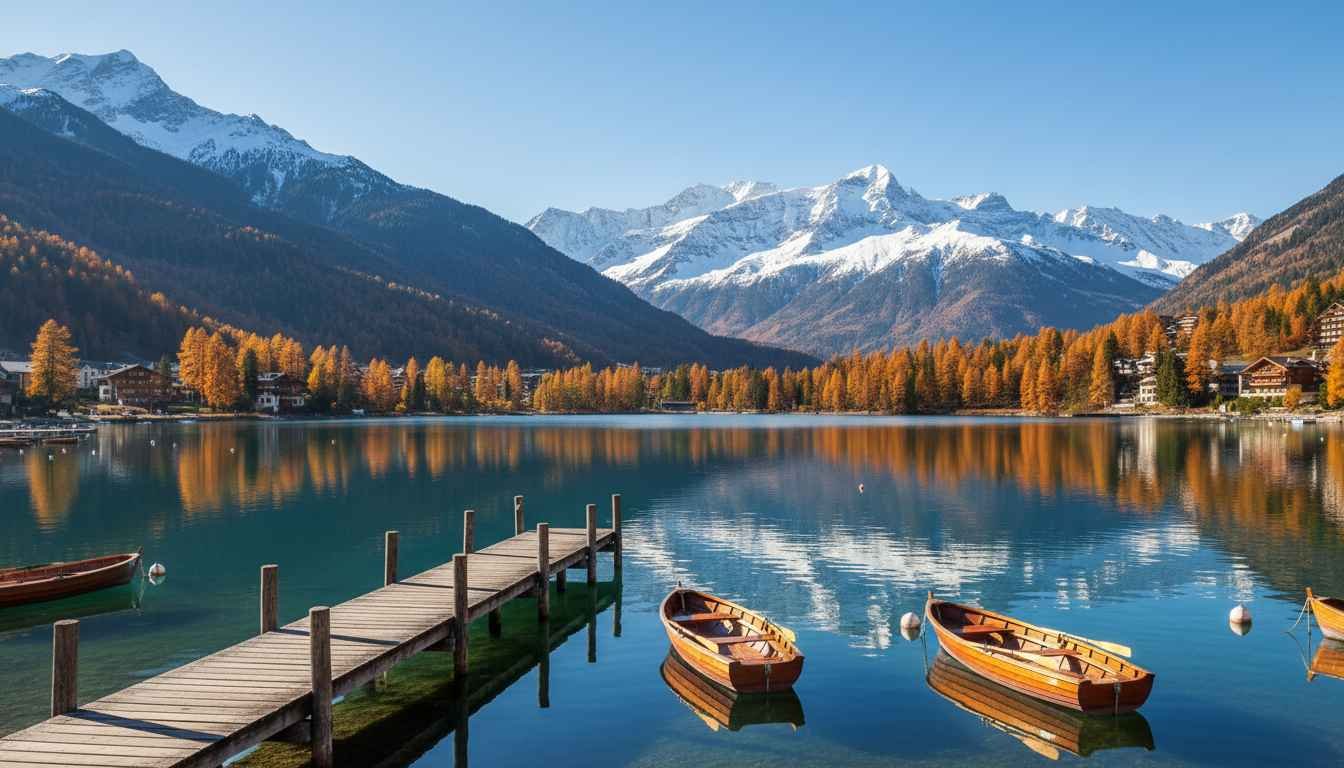
The town’s centerpiece is its lake, and it transforms completely with the seasons. In summer, it’s a mirror for the surrounding peaks — perfect for sailing, rowing, and lakeside walks. In winter, it freezes solid and becomes one of the most extraordinary venues in sports: each February it typically hosts White Turf, international horse races run on the frozen lake, complete with skijoring. Even without an event, a winter walk across the ice with the mountains ringing the horizon is unforgettable.
Corviglia: Skiing Above the Clouds
Corviglia is St. Moritz’s home mountain, reached by funicular directly from the town center. Its sunny, high-altitude slopes suit everyone from first-timers to experts, and the mountain restaurants — some among the most celebrated in the Alps — make lunch a highlight of the ski day. For a wilder challenge, nearby Corvatsch offers steeper terrain and spectacular glacier views. If you’re planning a ski-focused trip, our guide to Switzerland’s best places to visit in winter puts St. Moritz in context with the country’s other great snow destinations.
Diavolezza and the Bernina Glaciers
A short trip from St. Moritz, the Diavolezza cable car climbs to a panoramic terrace facing the Bernina massif — a wall of glaciated 4,000-meter peaks including Piz Bernina, the Eastern Alps’ highest summit. The viewing platform here delivers one of the great mountain panoramas in all of Switzerland, and in winter the Diavolezza glacier run offers a thrilling descent back toward the valley.
Muottas Muragl
The historic funicular to Muottas Muragl — running since 1907 — climbs to a sunny viewpoint above the Upper Engadin lakes. The panorama takes in the entire lake plateau with the Bernina range beyond. Come for sunrise or sunset, when the light turns the peaks gold, and stay for a meal at the mountaintop restaurant. In summer, it’s also the start of some of the Engadin’s finest panoramic hikes.
Segantini Museum and Engadine Museum
St. Moritz has cultural depth to match its scenery. The Segantini Museum, a striking stone rotunda, is dedicated to Giovanni Segantini, the divisionist painter who captured the Engadin’s extraordinary light like no one else. The Engadine Museum, housed in a traditional patrician house, walks you through five centuries of valley life — from paneled alpine parlors to traditional crafts.
The Leaning Tower and St. Moritz-Dorf
Look for the medieval Leaning Tower, all that remains of the 12th-century church of St. Mauritius, tilting picturesquely near the town center. Then wander Via Serlas, reputedly one of the most expensive shopping streets in the world, where flagship boutiques line a street barely 300 meters long. Even window-shopping here is a spectator sport.
The Cresta Run
Since the 1880s, riders have been hurtling headfirst down the Cresta Run, the legendary ice skeleton track built fresh each winter between St. Moritz and Celerina. Run by the St. Moritz Tobogganing Club, it’s one of the most storied courses in winter sports — watching a race morning here is a glimpse into a wonderfully eccentric British-Swiss tradition.
Summer in St. Moritz
Don’t write off the warm months. Summer brings wildflower hiking trails, lake swimming, sailing, and some of the Alps’ best mountain biking. The town markets its dry, sunny “champagne climate,” and the long daylight hours are made for terrace lunches above the lake. Many hotels offer far better value than in ski season.
Practical Tips for Visiting St. Moritz
- Getting there: The rail journey is part of the experience — about three hours from Zurich by train, or arrive in style on the Bernina Express, which terminates in St. Moritz.
- Budget honestly: St. Moritz is famously one of Switzerland’s most expensive resorts. Mid-range travelers should look at neighboring villages like Celerina or Pontresina for better-value stays with easy access.
- Best time: December to March for skiing and winter events; June to September for hiking and lake season. Shoulder months are quiet but many facilities close.
- Mountain cards: Many hotels include summer mountain transport in the stay — ask when booking, as it saves a great deal.
FAQ: Your St. Moritz Questions, Answered
Is St. Moritz worth visiting in summer?
Absolutely. The hiking, lake activities, and cultural sights shine in summer, crowds are thinner, and prices drop from winter peaks.
How many days do you need in St. Moritz?
Three to four days lets you ski or hike, ride the Diavolezza and Muottas Muragl lifts, explore the town, and take a day trip on the Bernina line.
Is St. Moritz only for skiers?
Not at all. Non-skiers get panoramic railways, museums, winter walks, lake activities, and some of the Alps’ best people-watching — though winter visitors who don’t ski should budget for the many non-ski experiences.
Final Thoughts
St. Moritz can dazzle with its glamour, but its real magic is older and simpler: the light on the lake at dawn, the silence of a snow-covered larch forest, the absurd grandeur of the Bernina glaciers. Come for the legend if you like — stay for the mountains.