Imagine your child curled up beside you on a spring afternoon, rain tapping the window, turning the pages of a book about seeds waking up underground. That is the quiet magic of a good spring book: it takes a season your child can already see, hear, and smell outside, and turns it into a story they want to revisit. Choosing well matters, because the right book at the right age does far more than fill an afternoon.
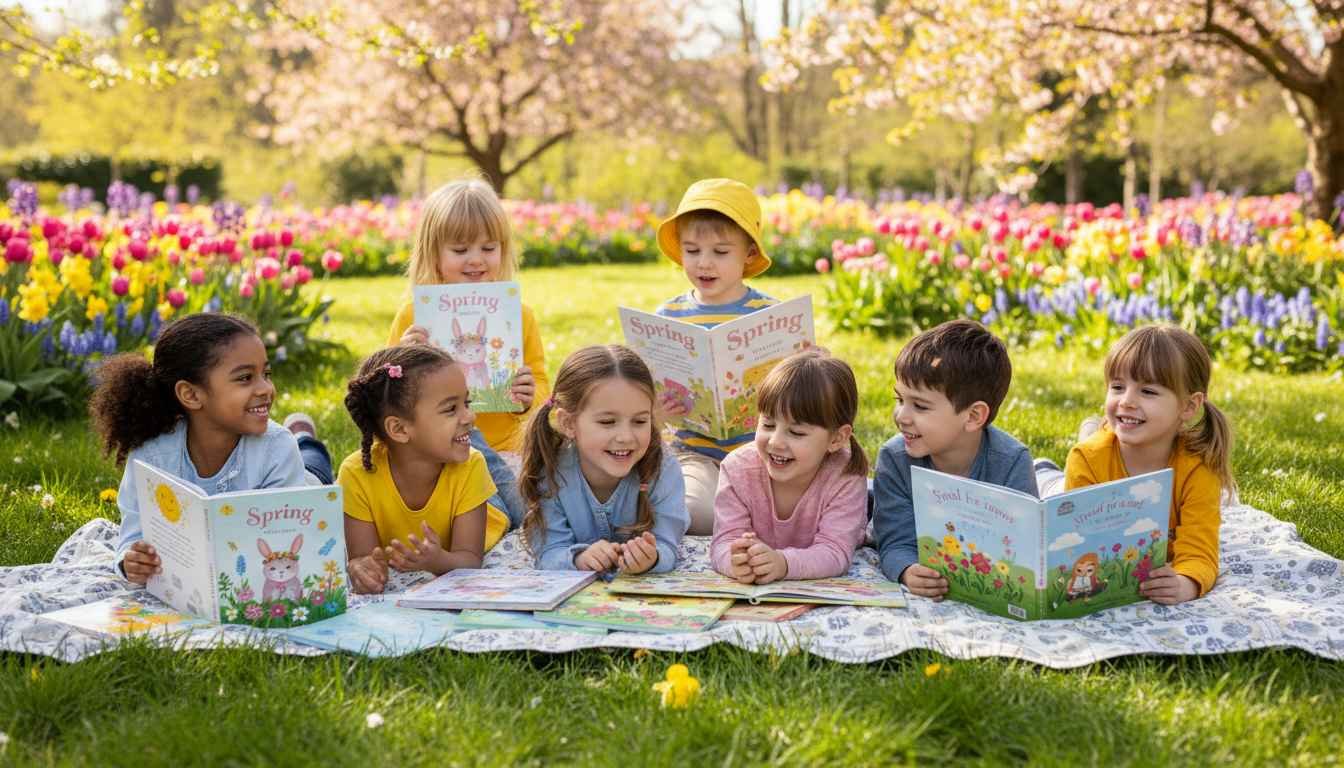
What Makes a Spring Book Work for Children
The best spring books for kids connect a story to something real. A child who has just seen buds on a tree understands a book about a growing seed in a way no abstract lesson can match. Look for books where the season drives the story — planting, hatching, migrating, or the first warm days after winter — rather than books that simply mention spring on the cover.
For younger children, illustrations carry much of the story, so choose art that is clear, warm, and detailed enough to talk about together. For early readers, short sentences and gentle repetition build confidence. For older children, look for books that answer their follow-up questions: why do birds migrate, how does a seed know when to grow, what lives in a pond in spring? A book that sparks a question is doing its job twice over.
Books Worth Reaching For
A few well-loved titles show what to look for. And Then It’s Spring by Julie Fogliano, illustrated by Erin E. Stead, follows a boy waiting patiently for his planted seeds, capturing the slow, hopeful feeling of early spring. Lois Ehlert’s Planting a Rainbow turns planting into a riot of colour that young children love to name and sort. Eric Carle’s The Tiny Seed follows one small seed through the seasons, giving children a gentle way to understand growth, luck, and patience.
For toddlers and preschoolers, Mouse’s First Spring by Lauren Thompson is a simple, joyful walk through the season’s first sights and sounds, while Kevin Henkes’ When Spring Comes celebrates the small, everyday changes — puddles, buds, baby animals — that children notice themselves. None of these books needs a gimmick: their strength is a clear story, honest observation, and pictures worth lingering over.
Match the Book to Your Child’s Age
Ages 2–4 do best with short books, strong pictures, and one simple idea per page. Read slowly, point at the pictures, and let your child name what they see. Ages 4–6 enjoy slightly longer stories, gentle humour, and books they can partly retell themselves. Ages 6–8 are ready for simple non-fiction alongside stories: books about life cycles, weather, and animals that answer the “why” questions this age loves to ask.
Watch your child’s response rather than their age label. If a book’s text feels dense or its ideas too abstract, set it aside for next spring without a fuss — the same book often lands perfectly a year later. Conversely, if your child asks for the same book every night, that repetition is learning, not a lack of imagination.
Turn Reading Into a Spring Activity
A spring book works even better when it leads outside. After reading about seeds, plant a few in a pot by the window and watch them together. After a book about birds, listen for birdsong on a walk and try to spot the singer. After a story about rain, jump in a puddle — then come inside and draw what you saw. These small follow-ups cost almost nothing and turn a story into a memory.
Keep the routine relaxed. Ten unhurried minutes of reading together beats a forced half-hour, and a book left where a child can reach it will be picked up far more often than one kept on a high shelf. If you want a fun, hands-on companion activity for a quiet afternoon, this playful Kiki’s Delivery Service bento box guide shows how a favourite story can inspire creative food fun for kids — the same spirit of turning a story into something children can make and enjoy.
FAQ: Spring Kids Books
How do I choose between a storybook and a non-fiction spring book? You do not have to. Stories build imagination and language; simple non-fiction answers curious questions. Many families enjoy one of each, alternating by mood — a story at bedtime, a fact book after a walk.
What if my child only wants the same book again? Let them. Repeated reading builds vocabulary, memory, and confidence, and children notice new details in familiar pictures each time. Add a new book alongside the favourite rather than replacing it.
Are interactive books with flaps and textures better? They can be delightful for toddlers, who learn by touching, but they are not essential. A well-told story with strong pictures holds attention just as well, and often for longer.
Final Thoughts
Spring gives you a rare gift as a parent: a season your child is already curious about, unfolding right outside the door. The right book meets that curiosity where it is — with a story to love, pictures to explore, and ideas worth taking outside. Choose books that respect your child’s age and intelligence, read them together without rushing, and let the season do the rest. The goal is not a shelf full of spring books. It is a child who reaches for a book on their own, because spring once taught them that reading feels like discovery.