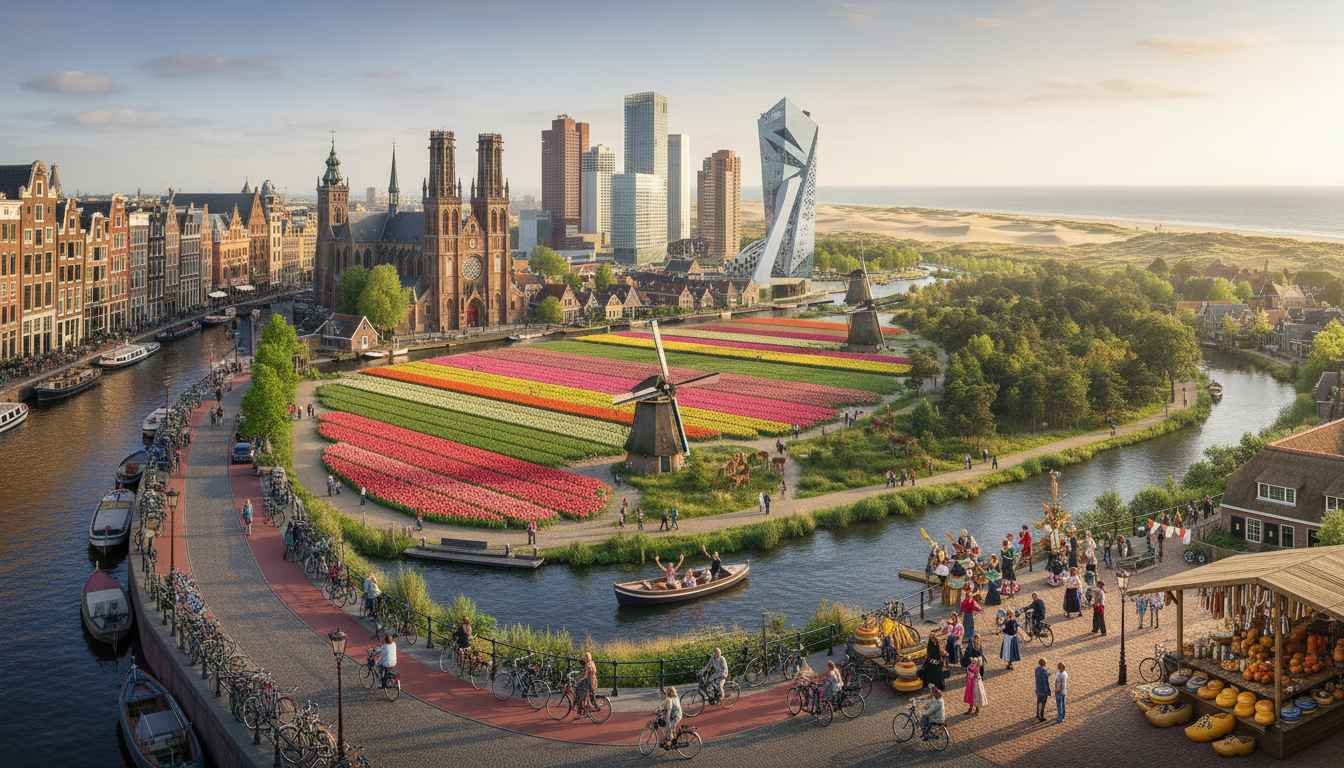
Imagine cycling along a canal at golden hour, past gabled houses, a windmill turning slowly in the distance and tulip fields stretching to the horizon. The Netherlands packs an unusual amount of variety into a small country: canal cities, medieval towns, modern architecture, flower fields and long sandy beaches, all connected by trains and cycle paths that make independent travel genuinely easy.
Amsterdam: Canals, Museums and Neighbourhoods
Amsterdam is the natural starting point. Its canal ring, built in the 17th century, is best seen from the water on a canal cruise or from a rented bike, and the city’s great museums, including the Rijksmuseum and the Van Gogh Museum, reward booking timed tickets in advance. Beyond the centre, neighbourhoods like Jordaan and De Pijp offer quieter streets, markets and cafes where locals actually eat. Walk the canals in the early morning, before the day-trippers arrive, and the city feels entirely different.
Utrecht and Haarlem: Historic Cities Without the Crowds
Utrecht, a short train ride from Amsterdam, has canals at street level with waterside cafes tucked into old wharves, plus the tall Dom Tower that dominates the skyline. Haarlem is another easy day trip, with a handsome main square, the Frans Hals Museum and streets that feel lived-in rather than staged for tourists. Both cities give you Dutch history and architecture at a gentler pace than the capital.
Rotterdam: Bold, Modern and Rebuilt
Rotterdam looks nothing like Amsterdam, and that is the point. Largely rebuilt after the Second World War, it is a city of striking modern buildings, a busy working port and a waterfront made for walking. The cube houses and the Markthal food market are the famous sights, but the real pleasure is the city’s confident, contemporary feel. If your trip has room for a second city, Rotterdam shows a different side of the country.
Windmills, Tulips and the Countryside
Kinderdijk, with its row of 18th-century windmills, is the classic Dutch postcard and a UNESCO World Heritage site. For flowers, the bulb fields around Lisse burst into colour in spring, and Keukenhof garden opens for a limited spring season each year, so check its dates before planning around it. Cycling is the best way to see the countryside: flat, well-marked routes run between villages, farms and nature reserves, and bike rental is available in most towns.
Hoge Veluwe and the Coast
Hoge Veluwe National Park combines forest, heathland and sand drifts with the Kröller-Müller Museum, and its free white bikes let you explore car-free. On the coast, Scheveningen near The Hague and Zandvoort near Amsterdam offer wide sandy beaches, dunes and seaside promenades that are popular with Dutch families in summer. For something quieter, the village of Giethoorn, known for its canals and thatched cottages, makes a peaceful day out, though it gets busy on summer weekends.
Practical Tips for the Netherlands
Trains connect the main cities quickly and reliably, so you rarely need a car unless you are exploring rural areas. Buy an OV-chipkaart or use contactless payment on public transport, and check current rules before travelling. English is widely spoken, restaurants commonly accept cards, and tipping is modest by American standards. If you have extra days, a short hop across the border opens up historic places to visit in Germany, another easy addition to a Low Countries trip.
FAQ
When is the best time to visit the Netherlands?
Spring, roughly April to May, brings tulips and mild weather. Summer suits the coast and outdoor festivals, while autumn is quieter with pleasant walking weather.
How many days do you need in the Netherlands?
Four to five days cover Amsterdam plus one or two day trips. A week lets you add Rotterdam, the coast and a national park without rushing.
Is the Netherlands good for families?
Yes. Flat cycling routes, parks, interactive museums and beaches make it one of Europe’s easiest countries to travel in with children.
Final Thoughts
The Netherlands rewards travellers who look beyond Amsterdam. Pair the capital with a historic town, a windmill landscape and a stretch of coast, and you will see why this small country leaves such a large impression.