
The 2 A.M. Test
You check in after a long travel day and fall asleep quickly — then you wake at 2 a.m. to a slamming door, a rattling elevator, and a hallway conversation that sounds like it is happening inside your room. You lie there, wide awake, counting the hours until breakfast. The problem is rarely that you are a bad sleeper. More often, you are a light sleeper in a noisy room — and the room, not your sleep habits, is what needs fixing. This guide shows you how to find quiet hotel rooms for light sleepers before you pay, not after a ruined night.
First, Know What Wakes You
Not all hotel noise is the same, and the fix depends on which kind bothers you. Hallway noise — doors, voices, housekeeping carts — usually comes through a thin door and the gap beneath it. Street noise comes through the window: traffic, nightlife, and early-morning deliveries. Plumbing and elevator noise travels through walls and floors. Think back to your last bad hotel night and name the culprit: if it was the corridor, your priority is a room far from the elevator and the ice machine; if it was the street, the side of the building and the window matter most.
Read the Room Location Like a Map
Before you look at photos or prices, look at the building. A room on a high floor, away from the elevator, the stairwell, and the housekeeping closet, is usually quieter than a room beside any of them — but a very high floor is not automatically best if the hotel has a rooftop bar or a mechanical floor above you. The street side faces traffic, the courtyard side usually faces less of it, and rooms above the lobby or ballroom can pick up music late into the evening. End-of-corridor rooms get less foot traffic.
Decode the Reviews for Noise Clues
Hotel descriptions almost never advertise noise, so the reviews are where the truth lives — but only if you read them the right way. Search the reviews for the words “noise,” “noisy,” “thin walls,” “hallway,” and “street” rather than reading the overall score. A hotel can score well overall and still be loud at night, because most guests are not light sleepers. Look for patterns, not single complaints: several mentions of thin walls or street noise across different months point to a real building issue.
Ask the Hotel Before You Book
A short, specific message before booking beats a complaint at midnight. Vague requests like “quiet room please” get filed away; specific ones get remembered. Try: “I am a light sleeper. Could you please place me on a high floor, away from the elevator and ice machine, on the courtyard side if possible, and away from any event space?” Ask them to note it on the reservation, then confirm it at check-in. If it was not noted, that is your moment to ask for a different room — while rooms are still available.
Choose the Room Type With Sleep in Mind
Some room types are simply quieter by design. A room with a solid door, thick curtains, and carpet rather than hard floors will dampen sound better than a sleek room with bare floors and a hollow door — and you can often spot these details in guest photos, even when the hotel’s own photos hide them. Suites and corner rooms can help because they often have fewer shared walls. A room marketed as “lively,” “social,” or “above the bar” is a warning sign for a light sleeper, as are rooms near the pool or gym, which may be lovely at noon and loud at 7 a.m.
Pack a Sleep Kit You Can Rely On
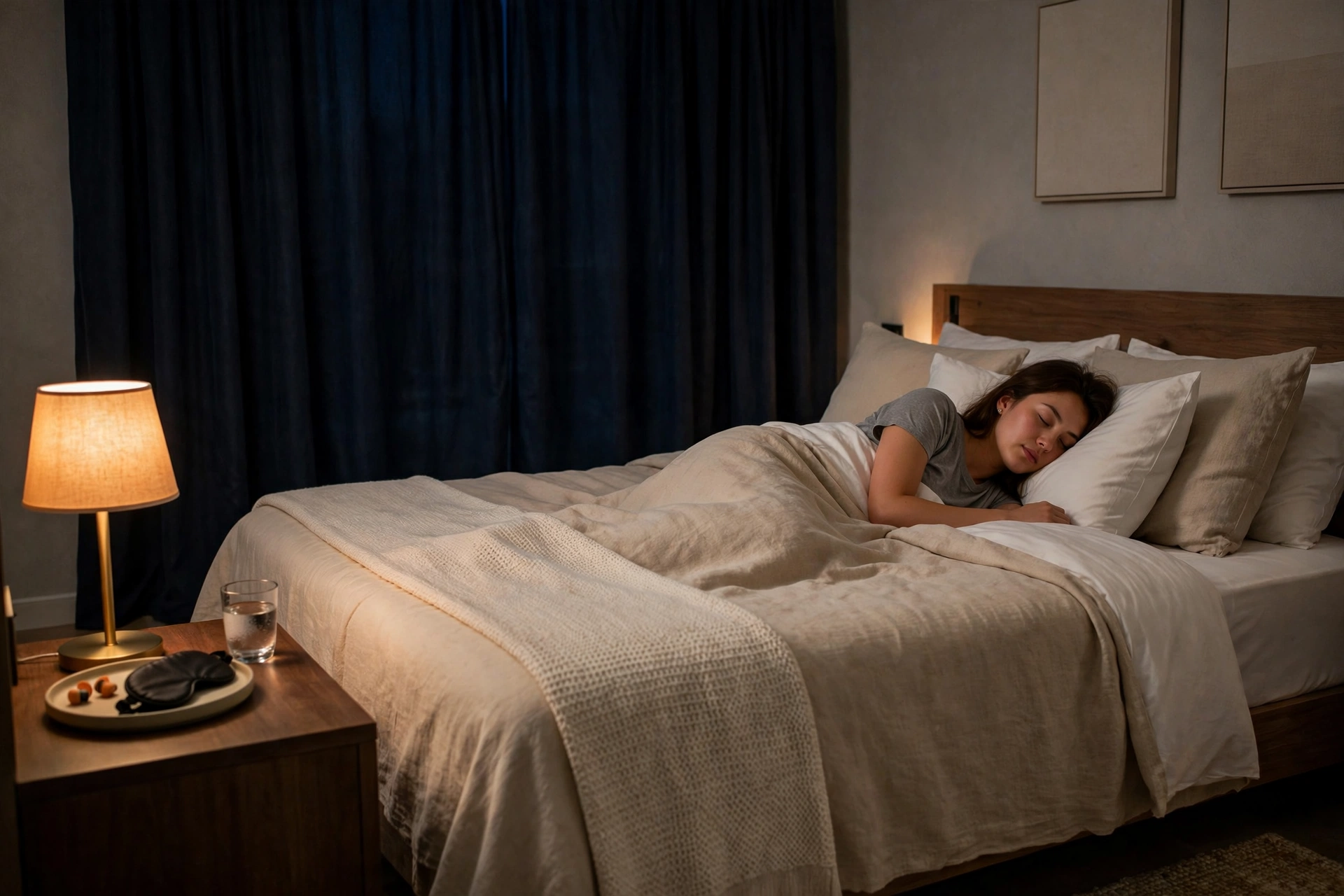
Even the best-chosen room can surprise you, so carry a small kit that makes any room quieter. Foam earplugs are cheap and light — try them at home first, since fit matters more than brand, and a plug that hurts after an hour will end up on the nightstand. A white-noise app can mask intermittent sounds like doors and voices, which are often more disruptive than steady background hum, and an eye mask helps because light and noise tend to wake light sleepers together. Keep the kit in your personal item, not your checked bag. For a full system on fitting everything into one bag, this guide to packing a carry-on for a two-week trip covers the essentials-kit habits that make a light sleep kit effortless.
Do a Ten-Minute Room Check on Arrival
When you get your room, do not unpack first. Spend ten minutes checking it the way a light sleeper would. Close the door and listen: can you hear the elevator, the hallway, or the room next door clearly? Look at what the window faces — a busy road, a loading bay, or a quiet courtyard — and check whether the curtains actually close fully. If something is wrong, ask to move now, calmly and specifically: “This room is right beside the elevator and I am a light sleeper — is there anything further down the corridor?” A polite, early request is far easier to grant than a midnight complaint.
If the Night Is Already Noisy
Sometimes you only discover the noise after you are in bed. Start with the simplest fixes: close the curtains fully, place a rolled towel along the bottom of the door to muffle hallway sound, and run your white-noise app at a steady, low volume. If the noise is a one-off, like a party in the next room, a calm call to reception is reasonable — that is what the desk is for. If the noise is structural, like a humming pipe, ask for maintenance or a room change in the morning. And if the stay is only one night between flights — where this guide to how to plan a layover tour in a new city covers the timing side — weigh whether a room change is worth the disruption, or whether your sleep kit will carry you through.
Final Thoughts
A quiet hotel room is rarely an accident. It is the result of a few small decisions made before you arrive: knowing what wakes you, choosing a room away from the building’s noise sources, reading reviews for patterns, and asking for a specific room in writing. None of these steps costs extra, and together they turn sleep from a gamble into a plan. You may still get an unlucky night now and then — no hotel can promise silence — but you will get far fewer of them, and you will wake rested, in a city you actually have the energy to enjoy.
FAQ:
What is the quietest floor in a hotel?
There is no single answer. A high floor away from the elevator is usually a good start, but avoid floors directly below a rooftop bar, gym, or mechanical floor, and floors directly above a restaurant or event space. The quietest room is the one furthest from the hotel’s noise sources, not simply the highest one.
Are newer hotels quieter than older ones?
Not necessarily. Newer buildings may have better insulation, but they can also have hard floors and hollow doors that carry sound, while older hotels with thick walls and carpet can be quieter. Judge the individual room and its reviews, not the building’s age.
Can I guarantee a quiet room when I book?
No hotel can guarantee silence. What you can do is make a specific, written request, confirm it at check-in, and check the room on arrival while a change is still possible. That combination gives you the best realistic chance.
Do earplugs work for light sleepers?
For many people, yes — especially foam plugs that fit well. Try them at home before your trip. If they hurt or fall out, try a different size or a white-noise app instead. If poor sleep is a regular problem at home as well as when traveling, consider speaking to a healthcare professional rather than relying on travel tips alone.
Should I complain about noise at night?
Yes, if the noise comes from another guest or an event the hotel controls — a calm call to reception is reasonable. If it is structural, like plumbing, raise it in the morning, when a room change or repair is practical.