
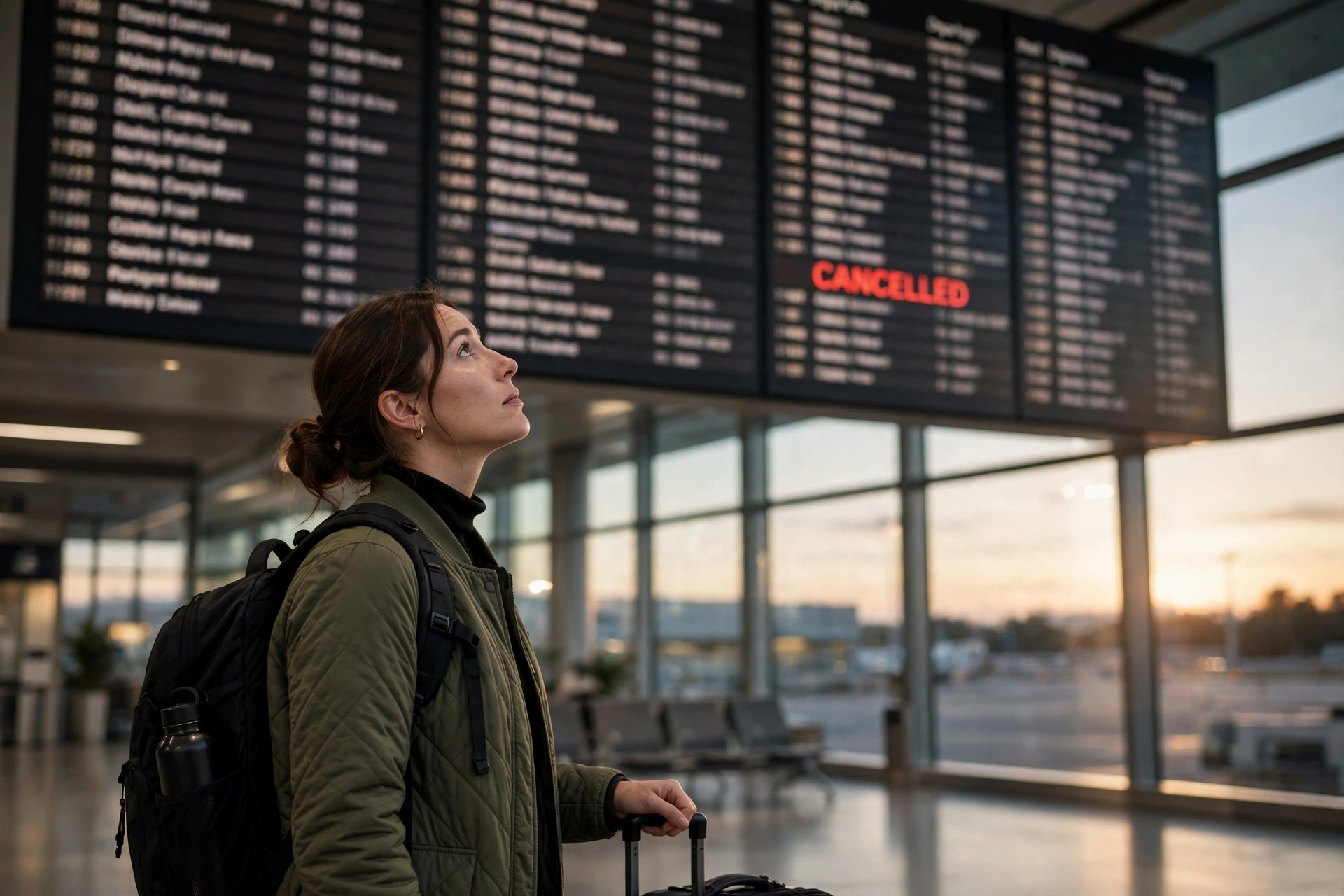
You are standing at the gate, bags packed and plans set, when the departure board flips to the one word no traveler wants to see: cancelled. Your first instinct may be to panic or rush to the longest queue in the terminal. Neither helps. A cancelled flight is a disruption you can manage if you work through it in the right order: confirm what happened, secure a new plan, understand your refund rights, then sort out food, a hotel, and the rest of your trip. This guide walks you through each step.
1. Confirm the Cancellation Before You Act
Start by confirming the cancellation in the airline’s app or on its website, not just on the airport screens, which can lag. Check your email and text messages too, since airlines often send rebooking offers or vouchers there first. Take a screenshot of the cancellation notice, your original booking, and any message from the airline: those records matter later if you claim a refund, compensation, or expenses.
Do not leave the airport yet. Leaving feels productive, but it can weaken your position: airlines handle stranded passengers at the airport first, and assistance such as meal vouchers or hotel rooms is arranged on the spot. Stay near the gate area until you know your options, and keep your boarding pass and identification within reach.
2. Get in Line and Work Every Channel at Once
Join the customer service queue, but do not rely on it alone. While you wait, open the airline’s app and look for self-service rebooking: many airlines let you pick a new flight in a few taps, often faster than an agent can. At the same time, call the airline’s customer service number; phone agents can sometimes see the same seats as desk agents, and a callback option beats standing in line for hours.
Be polite, specific, and ready. When you reach an agent, give your booking reference, destination, and deadline: “I need to reach Chicago tonight” is far more useful than “I need any flight.” Ask about every alternative, including partner airlines, indirect routes, and nearby airports. If the first offer does not work, ask what else exists. Seats disappear quickly, so speed matters more than perfection.
3. Know Your Three Choices: Rebook, Reroute, or Refund
When an airline cancels your flight, you generally face three choices: accept the airline’s rebooking onto the next available flight, ask to be rerouted through a different hub or on a partner airline if that gets you there sooner, or choose not to travel and ask for a refund instead. Understand the difference before you accept anything, because accepting a voucher or a rebooking can close off the refund option.
On flights to, from, or within the United States, the US Department of Transportation requires airlines to provide automatic refunds when they cancel a flight or make a significant change and you decline the alternative transportation, credits, or vouchers offered. The refund must go back to your original form of payment, promptly: within 7 business days for credit card purchases and 20 calendar days for other payment methods. You can read the full rules on the US Department of Transportation refunds page. The key point: a voucher is only acceptable if you affirmatively choose it; cash back is the default.
Flights departing from an EU airport, or arriving in the EU on an EU airline, fall under EU Regulation 261/2004. Beyond a refund or rerouting, those rules can add fixed compensation of €250 to €600 per person, depending on flight distance, when a cancellation is the airline’s fault and you were told at short notice. Weather and air traffic control restrictions generally count as extraordinary circumstances and do not trigger that compensation. If your trip touches both systems, for example a US–Europe flight, you may be owed a refund under US rules and compensation under EU rules, so check both.
4. If You Are Stuck Overnight: Meals, Hotels, and Essentials
Ask the airline directly what it will provide. Many airlines offer meal vouchers and, for overnight cancellations, a hotel room and transport to it. Policies vary by airline and by cause: a cancellation caused by weather is often treated differently from one caused by a mechanical problem. If the airline says it cannot help, ask for that answer in writing and keep every receipt for food, transport, and accommodation. Your travel insurance, or your credit card’s trip delay cover, may reimburse reasonable costs, but only with receipts and proof of the cancellation.
Your carry-on becomes your survival kit at this point. Medication, chargers, toiletries, a change of clothes, and travel documents should all be with you, not in a checked bag you cannot reach. If you regularly travel with only a cabin bag, packing a carry-on for a longer trip with those essentials included makes an unexpected overnight stay far less stressful. If you do need a hotel and you sleep lightly, it is worth finding a quiet hotel room for light sleepers rather than the first room near a noisy road or elevator bank: a poor night’s sleep makes the next day’s travel much harder.
5. Protect the Rest of Your Trip
Once your flight plan is settled, work through everything connected to it: move or cancel the first hotel night, car rental, airport transfer, tour, and any onward flight on a separate booking. Airlines are not responsible for separate bookings, so those changes are yours to make, and earlier is cheaper than later. For a package holiday, contact the tour operator instead: they carry responsibility for the whole package.
Notify anyone waiting for you, and if you are traveling for work, tell your employer or client once the new arrival time is firm rather than guessing. Then file your claims while the details are fresh: refund, compensation, and insurance claims all go more smoothly when submitted within days, with screenshots, receipts, and the airline’s messages attached.
6. Turn a Long Wait Into Something Useful
Not every cancellation means a ruined day. If your rebooking leaves you with several hours, or routes you through a new city with a long connection, use that time instead of simply enduring it. Some airports sell lounge day passes, which buy quiet seating, Wi-Fi, food, and showers. An overnight stay in an unfamiliar city can even become a small bonus: planning a layover tour in a new city works just as well for an unexpected stop as for a scheduled one, provided you leave generous time to get back through security. Never let a side trip risk the flight you have just secured.
FAQ:
Should I accept a travel voucher when my flight is cancelled?
Only if you actually want one. On US flights, a cash refund to your original payment method is the default when you decline the airline’s alternative, and a voucher should be your affirmative choice. Compare its value, expiry date, and restrictions against a full refund before deciding.
Will the airline pay for my hotel if the cancellation was caused by weather?
It depends on the airline and the route. EU rules require care, including meals and a hotel for an overnight wait, regardless of cause, though compensation for the disruption itself does not apply for extraordinary circumstances. US rules do not require the airline to pay for hotels, so check the airline’s customer service plan and your travel insurance.
What if I booked through a travel agency or booking site?
Contact the airline first for rebooking, since it controls the seats, but refunds often flow through whoever took your payment. If the agency was the merchant of record, it must pass the refund to you, so keep both informed and get every promise in writing.
How long should I wait before escalating a missing refund?
Allow the stated window first: 7 business days for a credit card purchase, 20 calendar days for other payment methods under US rules. After that, contact the airline in writing, then complain to the Department of Transportation or the relevant national enforcement body for EU flights.
Final Thoughts
A cancelled flight tests your patience, but it follows a predictable pattern: confirm, rebook, understand your rights, and protect the rest of your trip. The travelers who recover fastest are not the loudest in the queue; they are the ones who check the app while standing in line, ask for every alternative, and refuse a voucher they do not want. Keep your documents and receipts, and keep your next flight safe. The trip is delayed, not over.